
Using AI for UX Work: Study Guide
Unsure where to start? Use this collection of links to our articles and videos to learn about the best ways to use artificial intelligence for UX work.

⭐ Favourites
Updated 1 min ago · 20 articles from Nielsen Norman Group
Unsure where to start? Use this collection of links to our articles and videos to learn about the best ways to use artificial intelligence for UX work.

Take up to 2 in-depth training courses, teaching user experience best practices for successful design. Live online training focused on long-lasting skills fo...

Take up to 5 in-depth training courses, teaching user experience best practices for successful design. Training focused on long-lasting skills for UX profess...
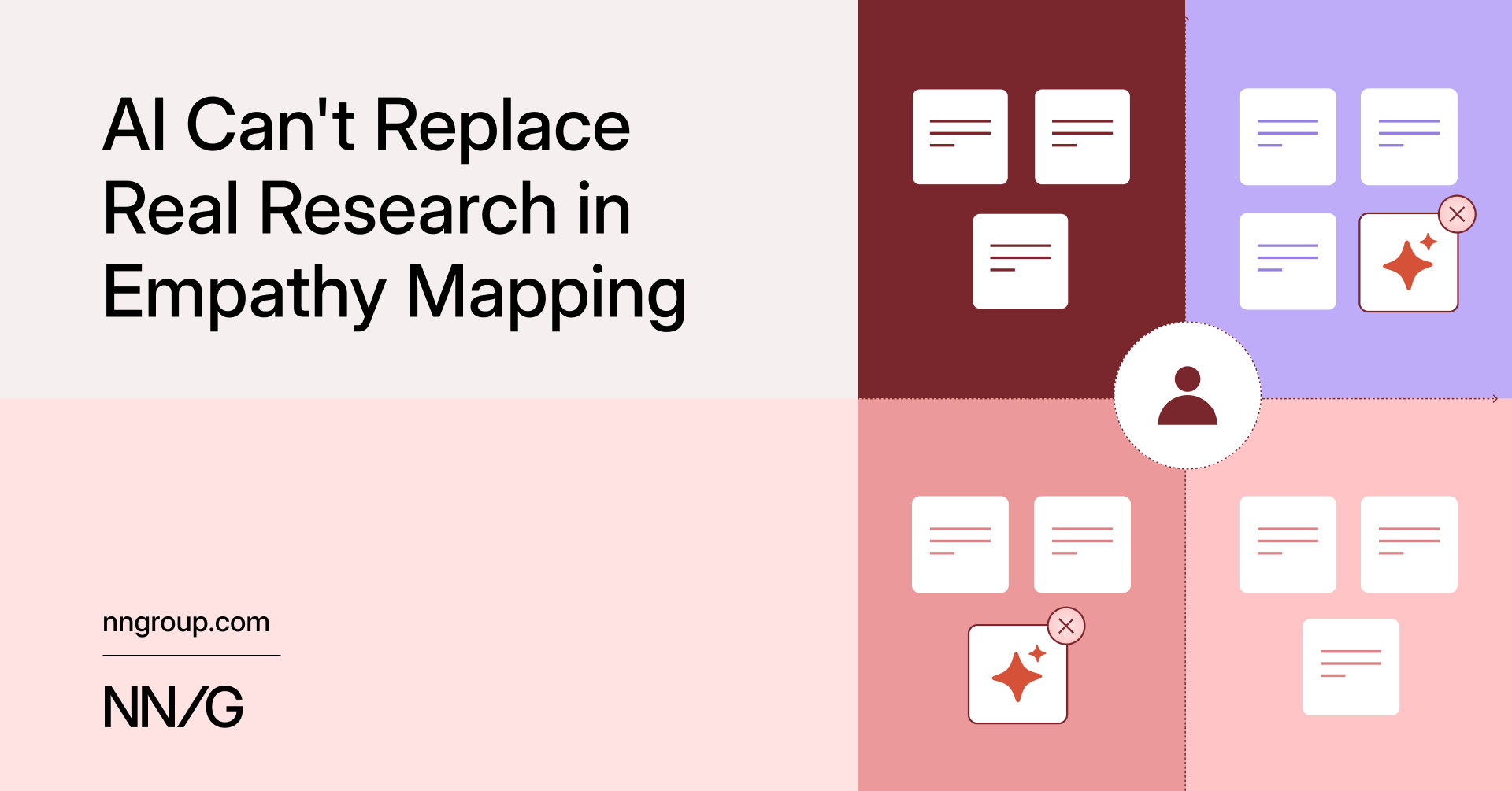
AI can help you organize research you’ve already collected, but it can’t create research evidence about the specific, messy experience of real users.
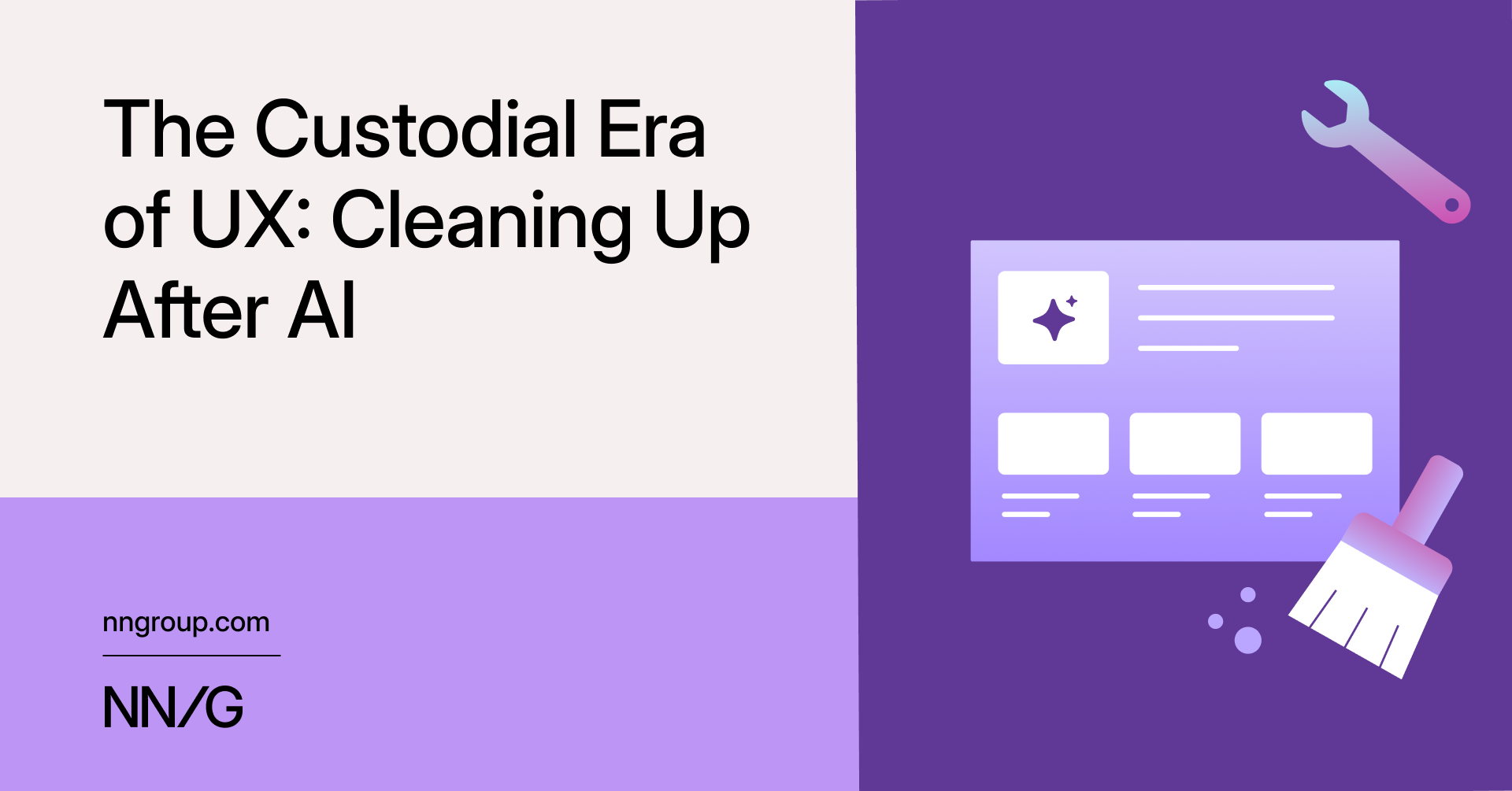
AI lets teams build faster than UX can evaluate. UX can adapt by building shared judgment, accelerating evaluation, and guiding AI-generated designs.
Take up to 5 in-depth training courses, teaching user experience best practices for successful design. Courses focused on long-lasting skills for UX professi...

Plain-language definitions of the AI terms that come up in product and design work, from tokens and context windows to agents, evals, and prompt injection.
When users didn’t know whether an image was AI-generated, the images we tested did not create any perception penalty compared to stock photos.
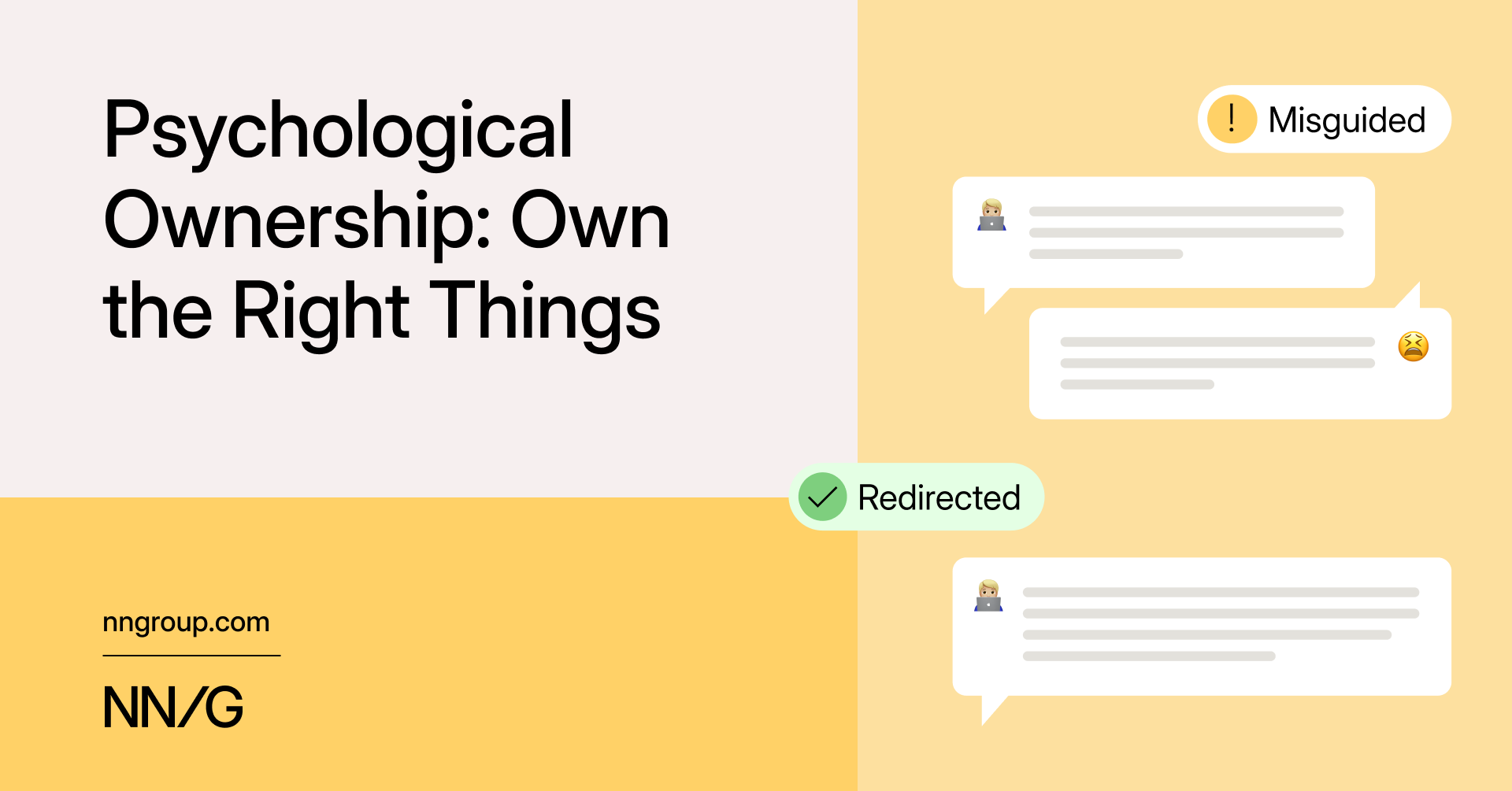
Psychological ownership can make you more effective, but you’ll struggle if it attaches to things you can’t control. Spot misplaced ownership and redirect it.
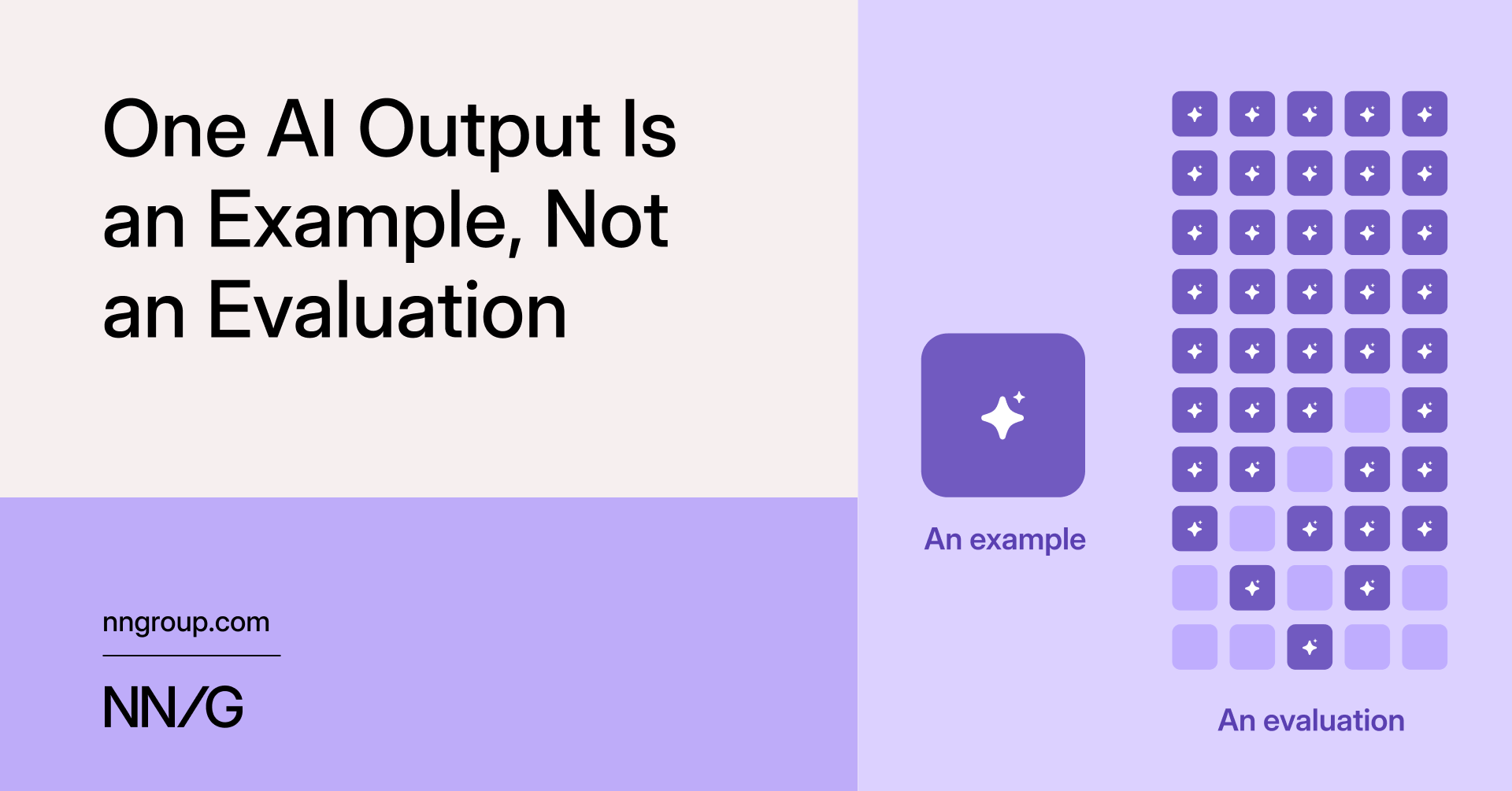
One output cannot establish how well an AI system performs. Evaluate with multiple representative inputs, repeated runs, and confidence intervals.
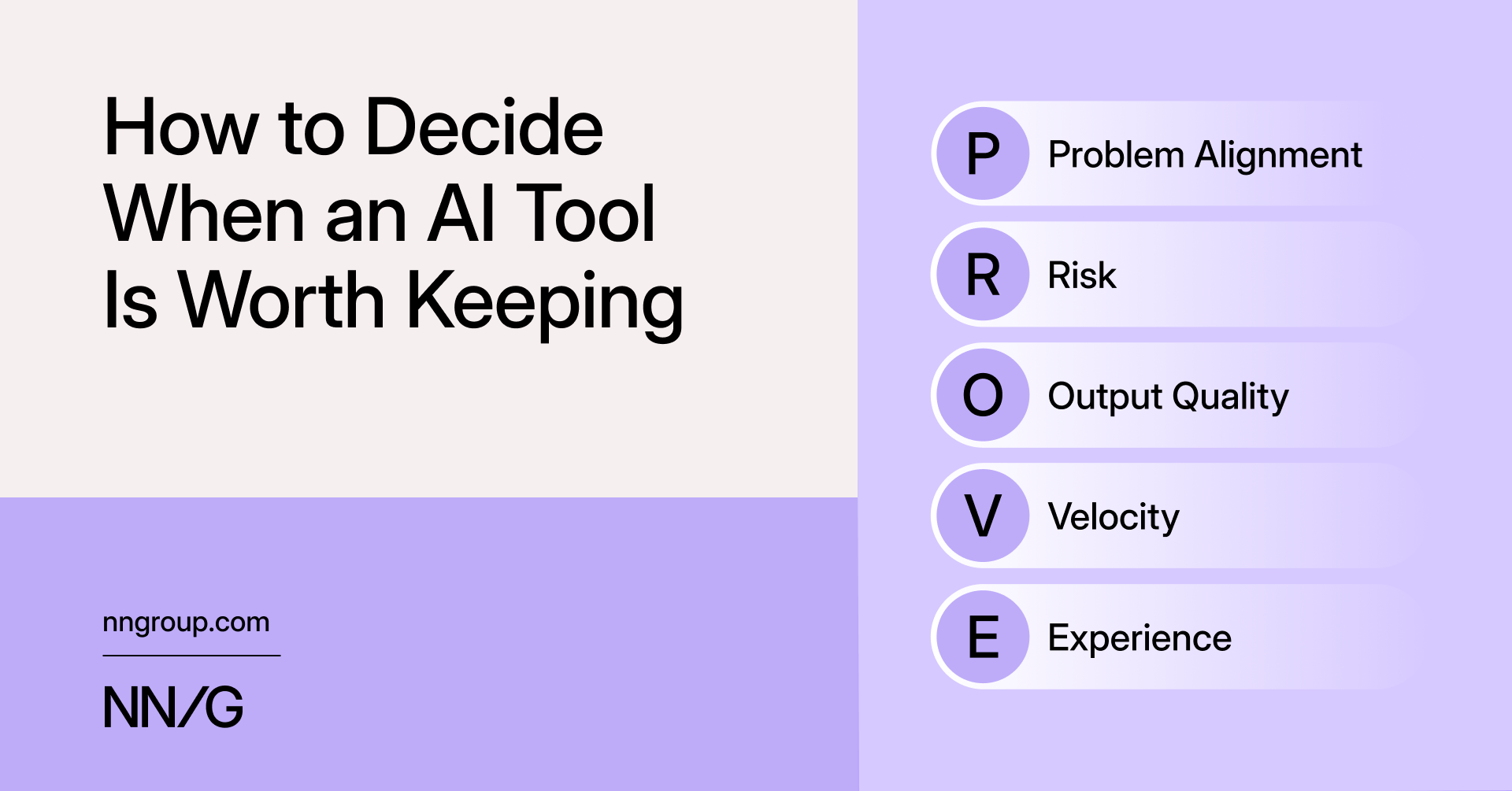
Pressure to adopt AI isn't evidence that a tool helps. The PROVE framework tests one tool against one task and produces a provisional decision you can defend.
Dogfooding, or using your own products internally, helps catch bugs, but it can't replace user research: your team knows too much to represent real users.
